
If you will indulge me, this started out as a story about a book. In October 2022, I was planning to attend the annual pilgrims conference sponsored …
The Company She Kept: A Letter to Dr. James Rendel Harris
If you will indulge me, this started out as a story about a book. In October 2022, I was planning to attend the annual pilgrims conference sponsored …
The Company She Kept: A Letter to Dr. James Rendel Harris
I am delighted to have an essay included in this exciting new book! To view the Kickstarter page, please click here.

Death’s Garden Revisited Relationships with Cemeteries is an anthology of personal essays about how the authors connect with cemeteries and graveyards.
Contributors are…
Editor Loren Rhoads is the author of 199 Cemeteries to See Before You Die and Wish You Were Here: Adventures in Cemetery Travel. She’s blogged about cemeteries as travel destinations since 2011 at CemeteryTravel.com. She’s also written about cemeteries for Legacy.com, the Daily Beast, Gothic.Net, Gothic Beauty, Mental Floss, the Cemetery Club, the Horror Writers Association, and so much more. She’s been a member of the Association for Gravestone Studies for more than 20 years.
Cemetery writers/Genealogists/Historians: Anne Born, Barbara Baird, Carrie Sessarego, Carole Tyrrell, Erika Mailman, J’aime Rubio, Jo Nell Huff, Joanne M. Austin, Rachelle Meilleur, Sharon Pajka, Trilby Plants
Horror authors: A. M. Muffaz, Angela Yuriko Smith, Christine Sutton, Denise N. Tapscott, E. M. Markoff, Emerian Rich, Frances Lu-Pai Ippolito, Francesca Maria, Greg Roensch, Mary Rajotte, Melodie Bolt, Priscilla Bettis, Rena Mason, Robert Holt, R. L. Merrill, Saraliza Anzaldua, Stephen Mark Rainey, and Trish Wilson.
Please join us April 14 in South Bend, Indiana, for a celebration of local poets and writing in Michiana.
We will have books for sale from The Backpack Press! Can’t wait? Can’t make it to SB? Look up top – My Bookstore has them all.

Available now! Author is available now for book talks and pilgrim association events.

If You Stand Here: A Pilgrim’s Tour of the Cathedral of Santiago de Compostela
by Amazon.com
Learn more: https://www.amazon.com/dp/B08TFW3P26/ref=cm_sw_em_r_mt_dp_-DAcGb3M74PDJ
#caminodesantiago
#santiagodecompostela
#cathedral
If you would like to try any of these books, please visit my bookstore – on Amazon: https://www.amazon.com/Anne-Born/e/B015EJGPXW
If you would like signed copies, let me know and I will be happy to send you one – or more! Write to bpackpress@gmail.com
If you have a book club that might be interested in reading with a talkback, I would be delighted to visit!
And look for the new TweedPod poscasts on TumbleweedPilgrim.com – stories of the Cathedral of Santiago de Compostela. Coming up shortly!
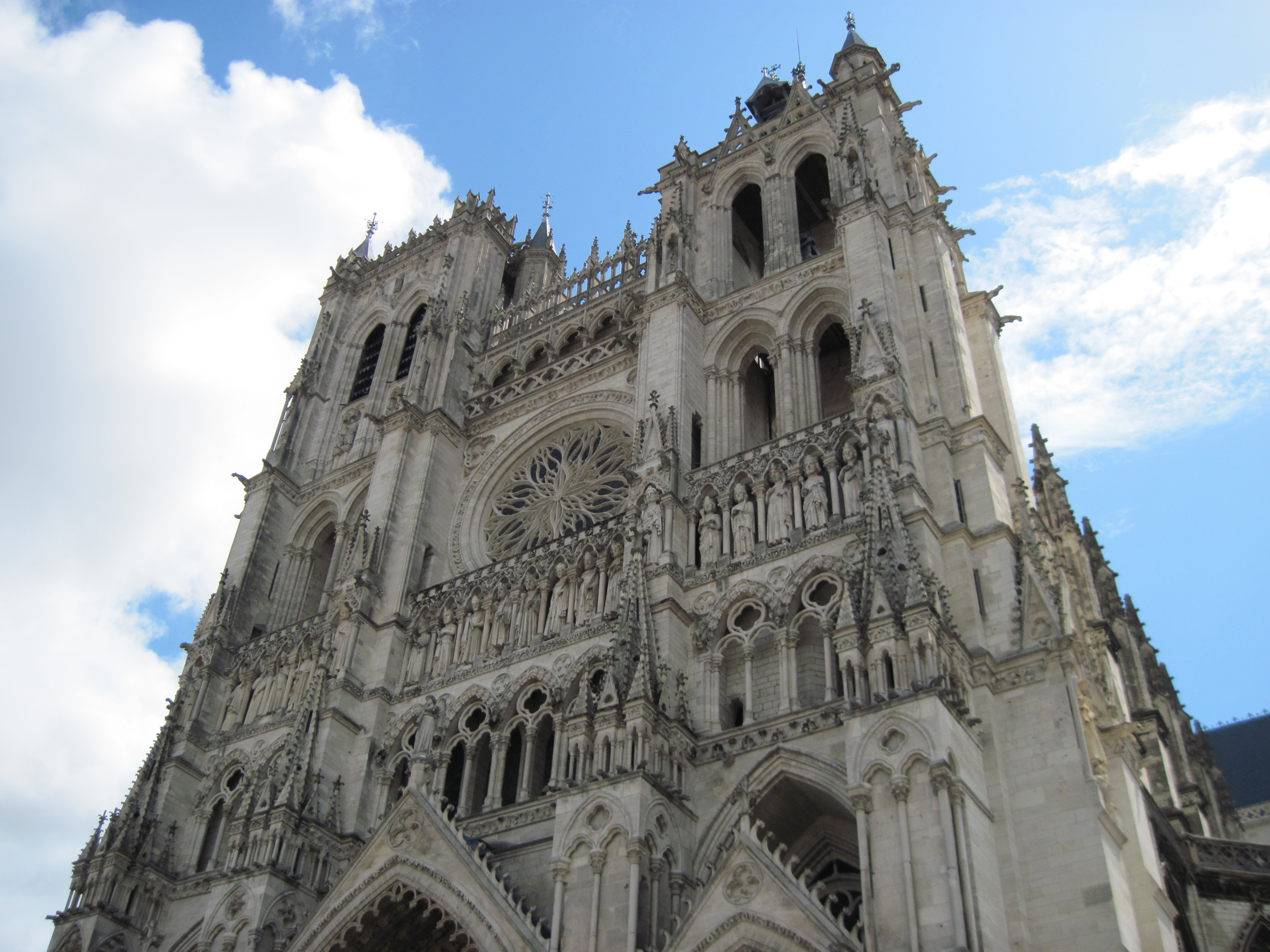
I am reminded of this story today in light of the devastating fire at my church.
In 2007, I took my daughter, my friend, and my cousin on a weeklong trip to Paris. We rented an atelier in the 6th, we shopped, we ate, we toured museums, and we even bought tickets on a bateau mouche for a nighttime tour of the Seine to see all the important monuments lit up. I had a fabulous time because I adore Paris in a way I have never felt about a place where I lived. I cherish my home town in Michigan, I delight in Chicago, I feel comfortable living in New York, and I am constantly challenged by Madrid, but I adore Paris. It holds my heart.
It was on this trip in 2007 that I finally fell in love with what is arguably the heart of Paris: the Cathedral of Notre Dame. In one of my Columbia University art history seminars, we studied medieval Paris and how this huge building went up. I learned how it replaced earlier churches, how it influenced other buildings, and how it helped to establish “Gothic.” I read Victor Hugo and learned how he felt about the atrocities of the French Revolution mobs that decapitated the sculpted figures of the biblical kings that spread out along the façade, thinking they were depicting the French aristocracy.
But through all this study, learning about all this conflict and chaos, I could not find my way around this building so that it would start to feel like anything but a bus station. To me, it was a tourist trap of the worst kind. I resented standing in line to get in, I hated the way nobody looked up at these wounded and restored sculptures on their way in, and I thought the machines that spat out gold coins with the image of the church were crass and out of place in what should have been a more solemn house of worship.
This particular trip in 2007 was a photo tour, though.
I had a new point-and-shoot camera and I pointed and shot everything that came into my view finder. I thought maybe if I could focus on detail and not the whole experience of Notre Dame, I might find the essence of history that I was missing. So I sat down in front of the building, on one of those stone slabs about 100 feet from the front doors, and I started taking pictures. I zoomed in on faces and objects in a way I hadn’t before, figuring, in the worst case scenario, I might get a nice screensaver out of it. I walked up to the façade and took close ups of the doorways and the small stone sculptures that were so important to the first visitors in the year 1250 and are nearly incomprehensible to most tourists now. And even though I know that most of this sculpted façade dates from the mid-19th century renovation and not the 13th century, I started to make the connection.
Our trip was nearly over when my daughter told me she would volunteer to get up just before dawn with me so I could take pictures of Notre Dame before daylight, when maybe all the tourists would still be in bed. I was really touched. We set an alarm, hailed a cab, and found ourselves standing on the opposite side of the plaza in the dark and, once the cab left, we were completely alone. There were no tourists or school groups. There were no hordes of confused- looking “If this is Tuesday, this must be Paris” bus people. It was just us and the sky was not yet ready for daylight.
We made our way across the empty plaza where we found a middle-aged man in a porter’s uniform, smoking a cigarette just outside the door on the right where most people enter Notre Dame when it is open. We walked up to him and started to make some small talk about the weather and how different everything looked at this hour compared to later in the day. We were just two American tourists and this was his break in the routine that would prepare the Cathedral for the first Mass at 7:00 a.m.
And then he asked us in.
We smiled and he just opened the door and we walked inside. Unlike any other time of day, the Cathedral was empty; cavernous and empty. All the way up the center aisle, there was someone carpet-sweeping the floor around the altar. The lights over the altar were lit, but the rest of the nave was dark. And it was in that instant that a thousand years of history came swirling around us. I felt the thrill of King Louis IX as he approached the altar in 1249, walking barefoot, carrying his latest treasure: the Crown of Thorns. I felt the arrogance of Napoleon in 1804, surrounded by minions and sycophants, as he snatched the emperor’s crown for himself. I suddenly understood why Hugo wanted so desperately to defend this church and why Viollet-le-Duc took such care in saving it. Even though the room was silent, I could hear Gregorian Chant hanging softly in the air above the heads of countless medieval pilgrims.
We walked out into the clear morning air and the porter took our picture sitting in two empty sculpture niches outside. We looked like two American tourists on our way back to the bus, but, in fact, we were two New Yorkers, too stunned to speak, wanting to savor the moment we had spent in this Cathedral all by ourselves, lost in the crowd of history.
We were only inside for a few minutes. It never even occurred to me to take out my camera.
If you would like to read more of my stories, please consider “Prayer Beads on the Train.”
This is an excerpt from that book.
Today, I am putting on my travel coach hat. This is where I hear your lament – “I have always wanted to go there!” – and I turn it into, “I am so glad I went there.”
Eiffel Tower? You can go to Paris, you know. How about a soccer game, opera performance, art exhibition, concert? How many times do you have to miss something because you just can’t figure out how to get there and back without breaking the bank?
I call it it a “Bugout.”
I was working at Columbia University many years ago in the Department of International and Public Affairs. The woman whose office was just next door to mine was a professor in the department and her husband taught in the Business School. They were very comfortable, financially speaking, and took some nice trips. But it was one trip in particular that made me re-think bugout travel. They went to Barcelona for the weekend. They left on Thursday night, and came back the following Tuesday.
I was stunned. They were not super rich first class, jet set travelers, they were just a husband and wife wanting to go to the museums in Barcelona for a few days. My conversation with her went something like this: “How did you, where are you, when did…” I never considered a trip like this. I always figured you had to have ten days, two weeks. I have a friend now who is going to Spain, Portugal, and Morocco – but for three weeks of traveling.
So, what did I learn? Other than you can go someplace far and get back in just a few days? I learned that bravery was necessary. That timing was critical to a successful bugout. That planning was essential. But that all in all, it was completely doable.
First consideration: the best long distance bugouts involve nonstop, direct flights to your destination. If you want to go to Barcelona, don’t fly in and out of Madrid. You run the risk of missing a connection when time is of the essence. This means you can go best when you can get to your destination in one flight.
Next – plan to take next to nothing with you. This will reinforce the bugout nature of the trip and ensure you get in and out of airports with the least number of events. Meaning, don’t check a bag you have to retrieve, run the risk of losing, have to drag around. Get just what you need into a carry-on.
Then, get tickets to the place and to your thing. I bugged out a few years ago to Miami to see a ballet company perform that was not going to be in New York that season. I remember calling my daughter when she lived in Madrid to see if she wanted to go to Lisbon for the weekend. I bought the tickets on Wednesday and was on the plane Thursday night. We spent Friday, Saturday, Sunday in Portugal visiting Lisbon and Sintra. She went back to Madrid, I went back to New York. We did the same thing for Barcelona. And just this past June, I went to Italy for a long weekend to see the Palio in Siena.
Bottom line – life is so short. If you can just get out to the airport, get out and go. Maybe it’s just to North Dakota because you’ve never been there. Or DC because you want to protest in front of the White House. Get maps, get guidebooks, get online and get your tickets.
It’s O.K.
If you’d like to read more travel tips, try “Buen Camino!” Paperback and Kindle.


Poetry & Prose...from Prompts
A Pilgrim's Tour of the Cathedral of Santiago de Compostela
Un espacio WordPress.com para el peregrino jacobeo
Proyecto de investigación
Welcome to the Camino de Santiago Operator's blog
A daily selection of the best content published on WordPress, collected for you by humans who love to read.
Writing about New York and everywhere else
The Semi-Adventurous Travellers
A letter you always wanted to write
Poetry and Prose of Jerry T. Johnson, Poet (photo by Matthew Hupert)
Writing about us, after the death of our parents
Rambling ruminations of an Irishman in Sri Lanka
My solo Camino adventure
a journal of fiction, creative non-fiction, and poetry
A World of Literary Pieces
This site chronicles my travels, musings &ramblings as I get busy celebrating life!
 The Backpack Press